Fall is the best time of year to spend 10 minutes on your water heater. The tank has just finished a hard summer of use, the incoming water is about to get cooler (which makes the heater work harder), and any small issue you catch now is a $25 fix instead of a $2,500 emergency replacement in January.
Here’s the exact fall checklist we walk homeowners through on maintenance calls in Riverside, Corona, Redlands, and the rest of the Inland Empire.
The 10-Minute Fall Water Heater Checklist
1. Look at the age tag on your tank
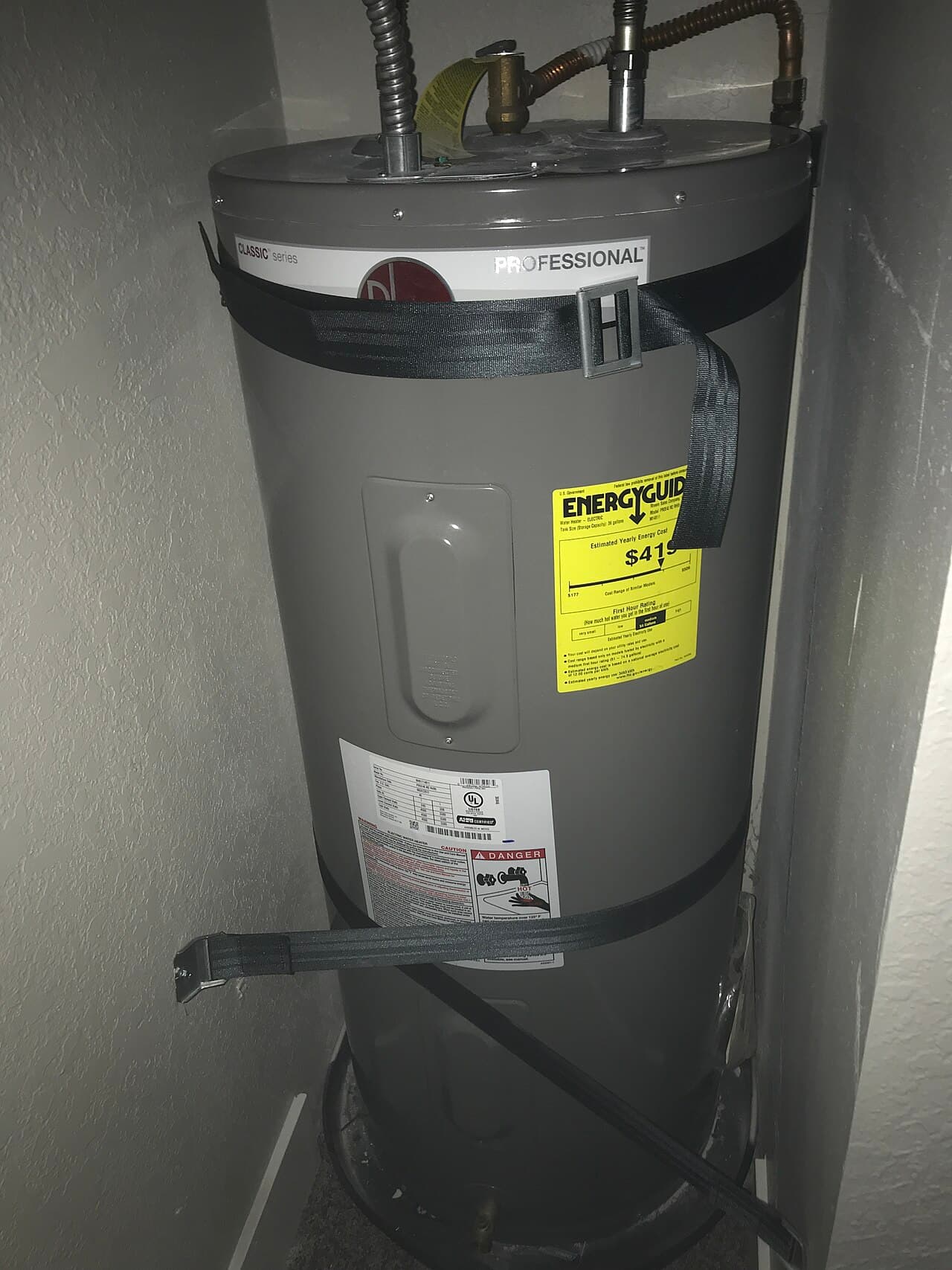
The serial number sticker on the side of your tank tells you the year it was built. Standard tank water heaters last 8–12 years in Inland Empire homes — sometimes less because of our hard water (more on that below). If your tank is 10+ years old and starting to show any of the symptoms below, plan for a replacement now rather than waking up to a flooded garage.
2. Check for rust or moisture at the base
Get down with a flashlight. Any rust at the base of the tank, water stains on the floor, or corrosion on the inlet/outlet fittings is a warning sign. A tank that’s starting to weep from the bottom is not a repair — it’s a replacement waiting to happen. Same for a rusted flue vent on a gas unit.
3. Test the temperature and pressure (T&P) relief valve
The T&P valve is the code-required safety valve on top or side of the tank. It should discharge water when you lift the test lever, then reseat when you let go. If nothing comes out, or it won’t stop dripping after, replace the valve. A stuck T&P is genuinely dangerous — CPSC guidance is clear that water heaters without a functional relief valve can catastrophically fail.
4. Flush the tank
Hard water is the #1 killer of water heaters in Riverside County. Sediment settles at the bottom of the tank, insulates the burner from the water, and causes the classic “popping” or “rumbling” sound. Left in place, it cracks glass linings and eats through the tank floor. A yearly water heater flush pulls the sediment out and adds years of life. If you’ve never flushed the tank and it’s more than 3 years old, call us — DIY-flushing a heavily-scaled tank can loosen a clog and shut the drain valve.
5. Inspect the anode rod (or ask us to)
The anode rod is a sacrificial metal rod inside the tank designed to corrode instead of the tank wall. Once it’s used up (usually 3–5 years in our water), the tank itself starts corroding. Replacing a spent anode rod is one of the cheapest ways to double the lifespan of a water heater — and one of the most-skipped maintenance items in the country.
6. Verify the temperature setting
The U.S. Department of Energy recommends 120°F for most homes — hot enough to prevent bacterial growth, cool enough to save 4–22% on water heating energy and prevent scald injuries. Higher than 130°F is unnecessary and speeds up scale buildup.
7. Check the venting on gas units
Look at the flue pipe on top of a gas water heater. It should rise at least 1/4 inch per foot of horizontal run, with no sagging, disconnected joints, or soot marks. Backdrafting flue gas is a carbon monoxide hazard. If you see soot streaks on the top of the tank or smell exhaust in the garage, shut off the gas and call a licensed plumber — or the gas company — immediately.
8. Test the drain pan and overflow line
If your water heater is in a garage or interior closet, it should sit in a drain pan with a line running to the exterior. Look for cracks in the pan and confirm the drain line is clear. This is the difference between a slow leak you spot from outside and a soaked drywall repair.
9. Insulate exposed hot water pipes
The first 3–6 feet of hot water pipe leaving the tank loses noticeable heat. Slip-on foam pipe insulation from any hardware store costs a few dollars and reduces standby loss. In the Inland Empire we don’t worry about freeze protection, but insulation still cuts your water heating bill a few percent.
10. Set a calendar reminder
Fall maintenance works because it’s consistent. Put a recurring calendar entry for the first weekend of November every year. Ten minutes now, thousands saved later.
Should You Replace an Aging Tank in Fall?
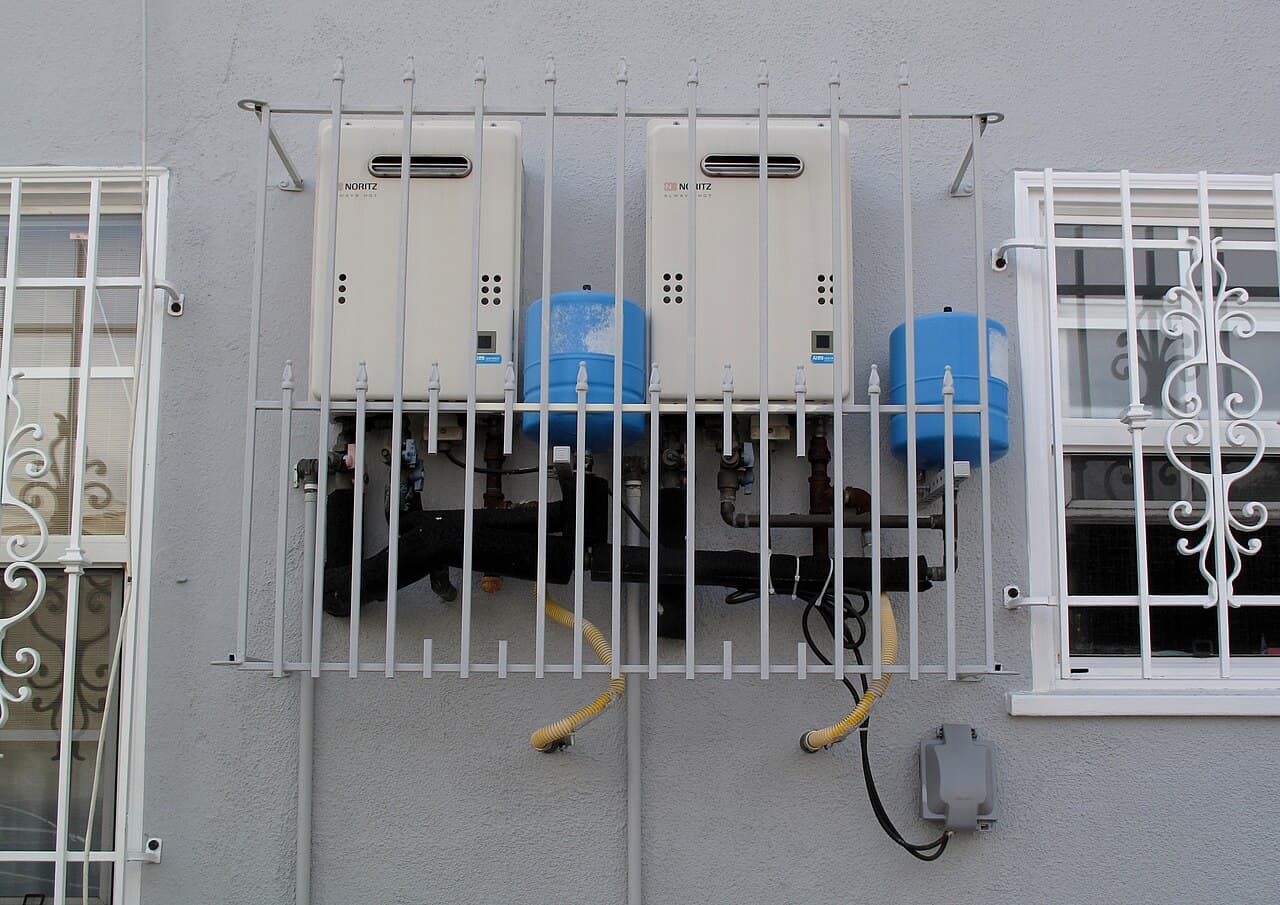
Fall is actually the smartest time to plan a proactive water heater replacement. You’re not competing with peak-season emergency demand, you have time to compare options like tankless, heat pump water heaters, or a more efficient gas tank replacement, and you avoid the middle-of-the-night failure that always seems to happen the week of Thanksgiving.
What We Do on a Fall Maintenance Visit
- Full flush of the tank with a scale-safe procedure.
- Anode rod inspection and replacement if depleted.
- T&P valve test and replacement if needed.
- Combustion / venting check on gas units.
- Full water heater safety report you can keep for your records.
Call (800) 697-4014 or get a free quote online. Same-day and next-day appointments across Riverside County, San Bernardino County, and the greater Inland Empire.