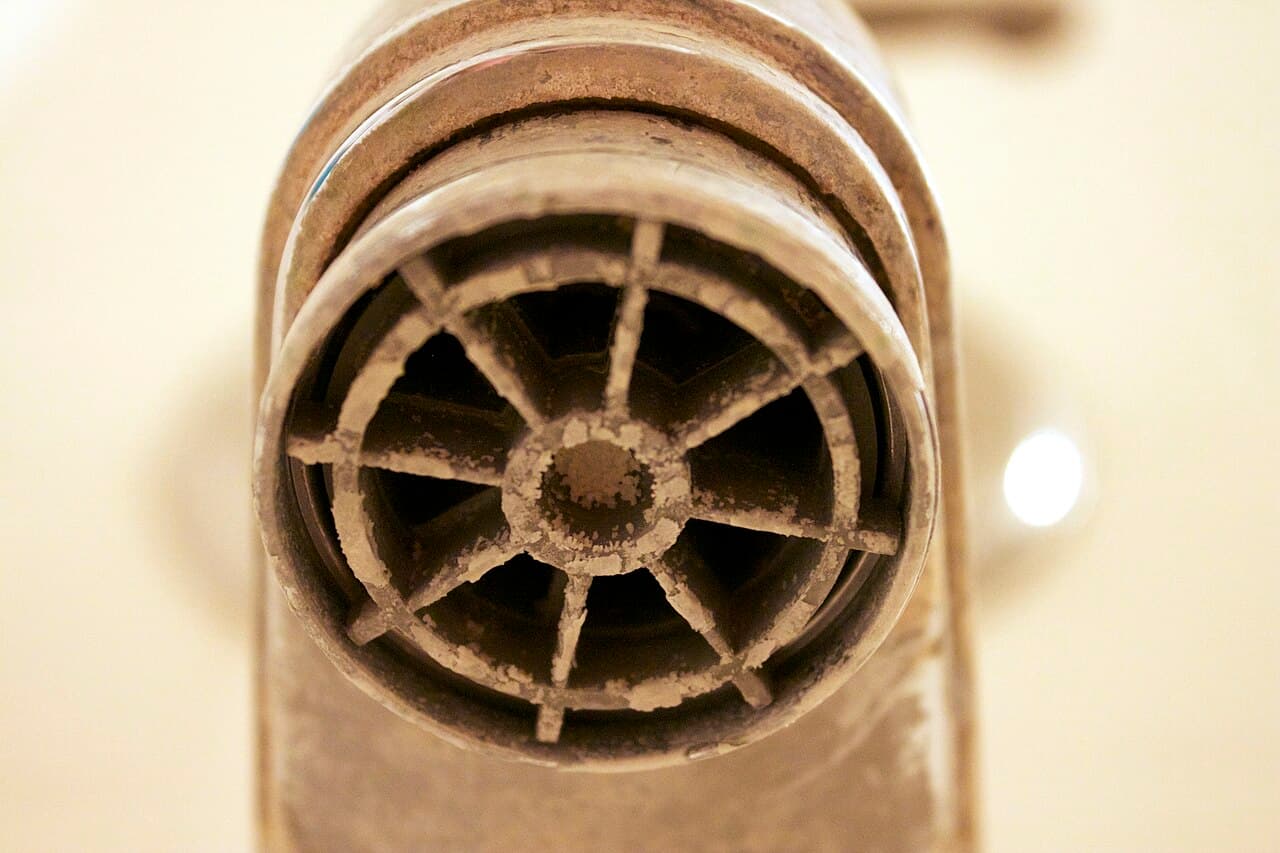
If you live in Riverside County, your water is hard. Really hard. Depending on your ZIP code, tap water here runs between 200 and 400+ parts per million of calcium and magnesium — well into what the USGS classifies as “very hard”. Corona, Riverside, Moreno Valley, Redlands, and San Bernardino all sit in that range.
Hard water is why your fixtures get spotty, your soap doesn’t lather, and your dishwasher never fully rinses clean. But the real cost isn’t cosmetic. It’s inside your water heater, and it’s cutting the useful life of that $2,000+ appliance in half.
The 5 Ways Hard Water Is Destroying Your Water Heater
1. Scale buildup on the bottom of the tank
Every time your water heater heats a gallon of Inland Empire water, some of the dissolved calcium and magnesium precipitates out as scale. Over the course of a year that scale layer at the bottom of the tank can grow to 1–3 inches thick. That layer acts as an insulator between the burner (or lower heating element) and the water above it. The result: the burner fires longer to hit the same temperature, gas or electric bills climb, and the tank floor overheats.
2. Popping, rumbling, and cracking noises
Ever hear your water heater make sounds like popcorn or a boiling pot? That’s water trapped underneath the scale layer flashing to steam and pushing up through the sediment. Beyond being annoying, it’s stressing the glass lining of the tank and accelerating tank failure.
3. Accelerated anode rod consumption
The sacrificial anode rod inside your tank is designed to corrode instead of the tank walls. Hard water — especially hard water with higher pH — eats through anode rods faster than average. What should last 4–5 years often gets used up in 2–3. Once the anode is gone, the tank itself starts corroding, and you’re counting down to a leak.
4. Tankless heat exchanger scaling
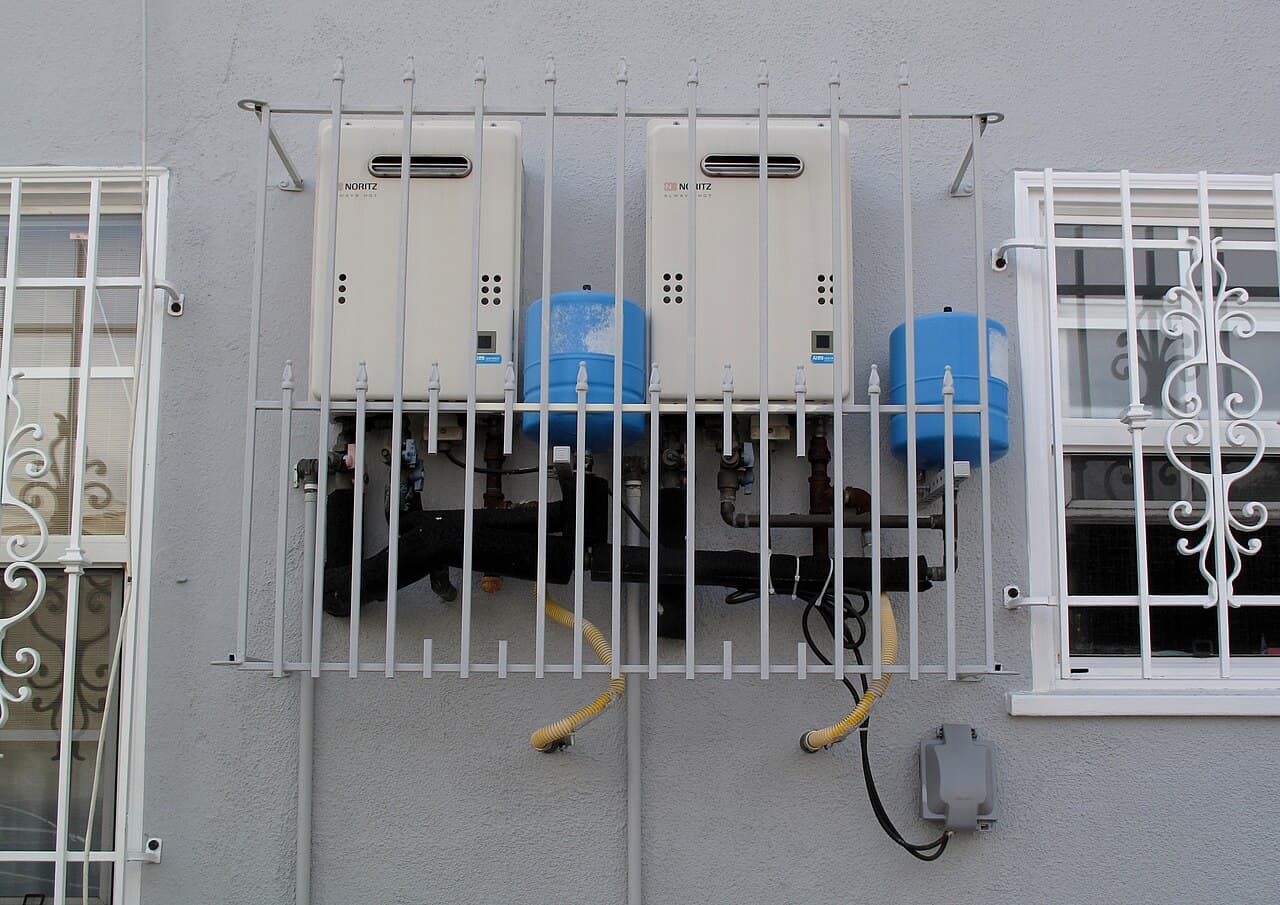
Tankless water heaters are even more sensitive to hard water than tanks. The narrow copper heat exchanger inside a tankless unit is where all the heat transfer happens — and where all the scale wants to form. In a tankless installed on unsoftened Riverside County water, we routinely see 20% capacity loss within 3 years. Manufacturer warranties often require annual descaling as a condition of coverage.
5. Failed inlet/outlet fittings and dip tubes
The dip tube that carries cold incoming water to the bottom of the tank, and the outlet fittings that deliver hot water out the top, both scale up over time. Reduced flow, uneven temperatures, and eventually leaks at the fittings themselves.
The Real Cost of Doing Nothing
A standard gas water heater is rated for 10–12 years. In heavily-scaled Riverside County installs with no maintenance, we routinely replace them at year 6 or 7. That’s roughly $150–$300 in wasted energy per year from insulating scale, plus a $2,000–$3,500 water heater replacement 5 years earlier than it should have been.
The math on prevention is simple. A yearly water heater flush costs a fraction of what you save.
The 4 Ways to Fight Back
1. Annual water heater flush (the cheapest fix)
A proper flush drains sediment and loose scale from the bottom of the tank. It doesn’t remove scale that’s already fused to the tank floor, but it stops the process from accelerating. Every tank in Riverside County should be flushed once a year, minimum. Tankless heat exchangers should be descaled with a vinegar or citric acid solution annually — or per manufacturer requirement.
2. Whole-house water softener
A salt-based ion exchange softener removes hardness at the source. Every faucet, shower, appliance, and water heater in the house benefits. Fixture lifespan goes up, cleaning products go further, and skin/hair feel noticeably better. The downside is regular salt refills and slightly higher sodium in your drinking water — which is why we usually recommend pairing a whole-house softener with a reverse osmosis system at the kitchen sink for drinking and cooking water.
3. Salt-free scale conditioner
Also called template-assisted crystallization (TAC) systems, these change the structure of calcium so it doesn’t adhere to surfaces. They don’t “soften” water in the technical sense — soap will still lather less than with a real softener — but they do meaningfully reduce scale buildup inside water heaters and pipes. Good option for homeowners who don’t want to deal with salt.
4. Whole-house filtration
A dedicated whole-house filtration system won’t soften your water on its own, but pairing filtration with softening or conditioning gives you the best result: fewer contaminants, less scale, longer-lasting water heater and fixtures. This is the combo we install most in Riverside County.
Signs Your Water Heater Is Already Suffering
- Popping or rumbling noises when it heats.
- Less hot water than you used to have — showers running lukewarm sooner.
- Gas bill has quietly crept up 15–25% year over year.
- Rust-colored water from the hot side only (indicates internal corrosion).
- Water heater is 8+ years old and has never been flushed.
Any two of the above and it’s time to have a professional look at it. Sometimes it’s a flush + anode rod replacement and you get 3–5 more years. Sometimes the tank is done and it’s time for a proactive water heater replacement before you wake up to a flooded garage.
What About My Neighbor Whose Tank Lasted 15 Years?
Three factors extend water heater lifespan even in hard water:
- The home had a water softener or conditioner installed.
- The tank was flushed regularly.
- The anode rod was replaced at least once.
Statistically, someone with all three has a tank still going strong at year 14. Someone with none of the three is calling us at year 7. The difference isn’t luck. It’s the water.
Call (800) 697-4014 or request a free in-home water test. We’ll test your hardness, TDS, and chlorine, then recommend a right-sized solution — from a simple flush to a full softener + filtration package. No pressure, no sales pitch.