When the Santa Anas rip through the Inland Empire, they don’t just knock over patio furniture. They drive fine dust, pollen, agricultural particulate, and sometimes wildfire smoke into every home in Riverside and San Bernardino County — through open windows, weatherstripping gaps, attic ventilation, and yes, straight through your HVAC system.
The 24–72 hours after a major wind event is when the indoor air in most homes is measurably worse than the outdoor air. Here’s what to do about it.
Why Santa Ana Winds Are a Bigger Indoor Air Problem Than You Think
Santa Ana winds accelerate from cold, dry, high-pressure air over the Great Basin as it drops down through the passes into the Inland Empire. By the time it hits your home in Corona or Redlands, it’s dry, gusty, and loaded with anything it’s picked up along the way. During wind events the EPA’s AirNow index often reads “Moderate” to “Unhealthy for Sensitive Groups” across the region even without an active wildfire.
Two things happen inside your home:
- Positive pressure pushes airborne particulate through every gap in the envelope. Your home is never perfectly sealed.
- Your HVAC system pulls that contaminated indoor air across a filter that in most homes is either the wrong grade or overdue for replacement.
The Same-Day Homeowner Checklist After a Wind Event
1. Close all windows and exterior doors until AQI improves
Even if the wind “feels” refreshing. Check airnow.gov for your ZIP code before you reopen windows. During and immediately after Santa Anas, indoor air is usually cleaner than outdoor air only if your HVAC filter is doing its job.
2. Change your HVAC filter
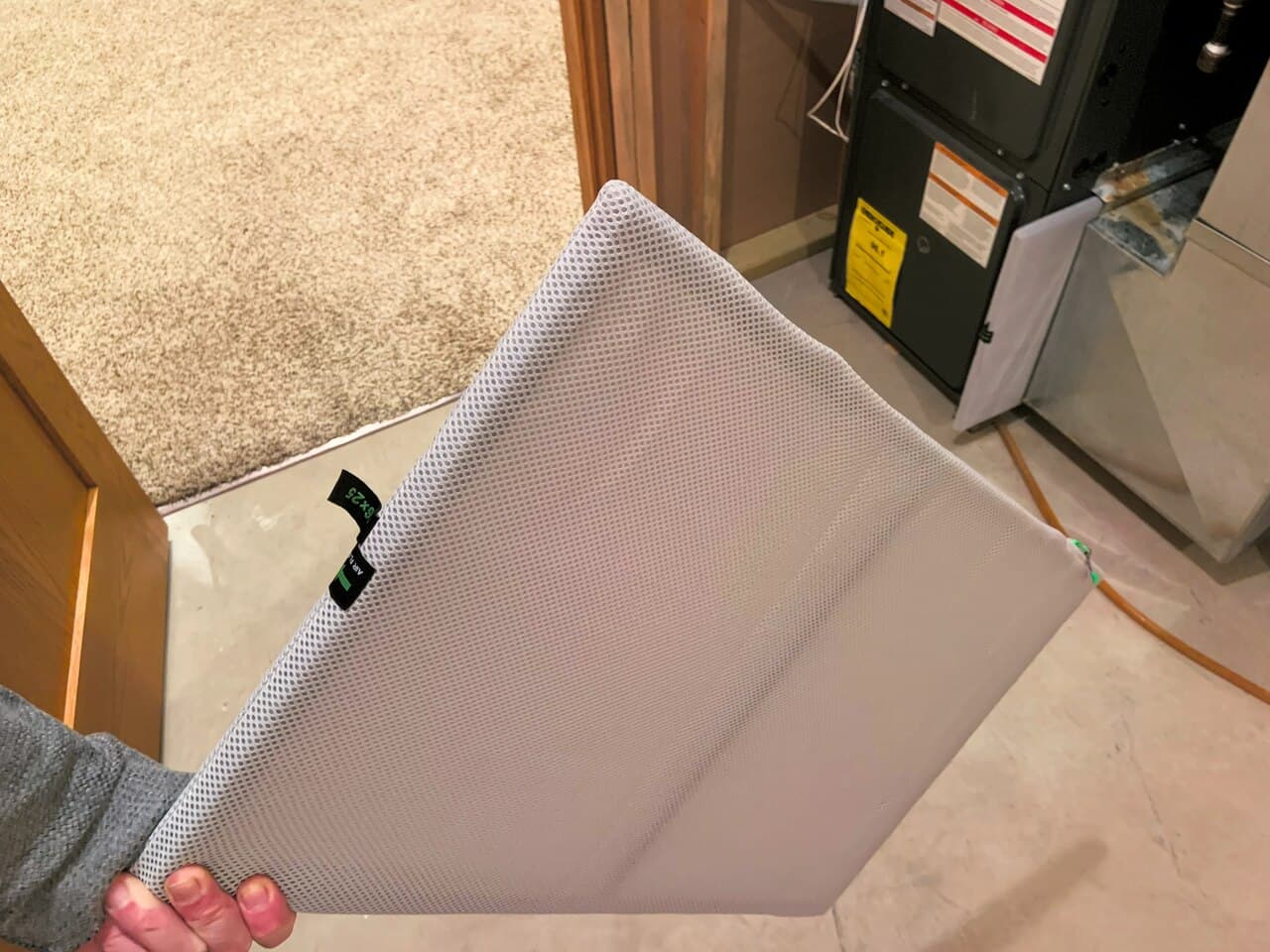
A pleated MERV 11 or MERV 13 filter captures the ultrafine particulate driven in by wind and smoke events. Cheap fiberglass filters (MERV 1–4) do almost nothing for the particles that actually matter. If the current filter is grey and the pleats are packed, replace it now — not next month. During bad wind seasons we replace ours as often as every 30 days.
3. Run the HVAC fan on “On” for 4–6 hours
Set your thermostat fan mode to On instead of Auto after a wind event. Continuous circulation runs your indoor air through the filter over and over, dramatically dropping particulate counts within a few hours. Then set it back to Auto to save energy.
4. Wipe down horizontal surfaces
Damp microfiber, not dry dusting. Dry dusting suspends particulate right back into the air. Priority surfaces: ceiling fan blades, entry mats, floors near door thresholds, HVAC return grilles.
5. Consider a portable HEPA unit in the bedroom
For anyone with asthma, COPD, allergies, or infants, a portable HEPA air cleaner rated for your bedroom’s square footage — running overnight — is the single most impactful thing you can do. It’s not a substitute for whole-home filtration, but it’s a great supplement.
The Long-Term Fix: Whole-Home Indoor Air Quality
Homes we’ve upgraded with proper whole-home indoor air quality systems handle Santa Ana events dramatically better. There are three components worth considering:
Whole-Home Air Filtration
A high-MERV media filter cabinet or an electronic air cleaner installed at the air handler catches particulate at every air change. Media filter cabinets are the sweet spot — 5” deep MERV 13 filters last 6–12 months and don’t restrict airflow the way undersized 1” MERV 13 filters do. See our air filtration systems page for the specific models we install most.
UV-C Purification
UV-C lamps installed at the evaporator coil kill mold spores and bacteria that grow in the always-damp environment inside your air handler. Not a substitute for filtration, but a strong complement, especially for homes with allergy sensitivities.
Duct Sealing and Cleaning
Every wind event pushes fresh particulate into your ducts. If your ducts have never been professionally cleaned — or if visible dust is blowing out of your supply registers — a full duct cleaning gets you back to a clean baseline. See our air duct cleaning service for what’s actually included in a legitimate cleaning versus the “$79 whole-home” bait ads.
Wildfire Smoke Is a Special Case
During active wildfire events in the region — and Santa Anas are the classic wildfire driver in Southern California — the priority order flips. In this order:
- Close windows and doors immediately, don’t open until AQI drops.
- Set HVAC fan to “On” with a MERV 13 filter in place.
- Consider a portable HEPA in your primary living space in addition to the bedroom.
- If you have a fresh-air intake or ERV, close or bypass the outdoor intake during heavy smoke.
The California Air Resources Board’s Smoke Ready California program has excellent free resources on preparing your home for wildfire smoke — worth bookmarking now.
The Bottom Line
You can’t stop the Santa Anas. You can make sure your home’s indoor air handles them without turning your living room into a dust cloud. It starts with a good filter and ends with a properly-designed whole-home indoor air quality system.
Not sure whether your current filter and duct system are pulling their weight? Call (800) 697-4014 or book a free IAQ assessment. We’ll measure your indoor air, check your filter, and give you an honest recommendation — no upsell.