Every year the first sub-40°F morning in the Inland Empire lights up our phones. We’ll take 30–40 emergency furnace repair calls in a single day, and the pattern is always the same: a furnace that ran fine last winter, sat idle all summer, and then refused to start on the first cold morning of the year.
Here’s why it happens, what the most common failures actually are, and what you can do this fall to make sure your family isn’t the one shivering next February.
Why the First Cold Morning Is So Brutal on Furnaces
Southern California furnaces are the most under-used piece of major equipment in your home. A furnace in Minnesota runs six months a year. A furnace in Corona might run 30 hours the whole winter. That long idle period is where problems form:
- Igniters and flame sensors accumulate an oxide coating.
- Blower bearings dry out.
- Rodents, dust, and spider webs collect in the burner compartment.
- Condensate lines on high-efficiency units grow biofilm.
- Thermocouples and pressure switches drift out of spec.
None of those problems show up during the summer. All of them show up the first time you demand 30 minutes of continuous heat from a system that hasn’t run since March.
The 6 Most Common First-Cold-Morning Failures (In Order)
1. Dirty flame sensor
The single most common furnace no-heat call in Southern California. A flame sensor is a small metal rod that detects whether the burner actually ignited. Oxide buildup makes it read no flame even when the burner is lit, so the furnace shuts down as a safety measure. Cleaning takes a technician 10 minutes with steel wool.
2. Failed hot-surface igniter
The ceramic igniter glows red-hot to light the burners. They typically last 5–7 years, but the thermal shock of the first cold start is what usually finishes them off. A furnace that clicks, blows cold air for 90 seconds, and shuts down is almost always this.
3. Cracked or failed pressure switch
A pressure switch confirms that the exhaust fan (inducer motor) is pulling combustion gases out safely before the burner is allowed to fire. If the switch is stuck or the intake vent is blocked (mice love the exterior vent hood), the furnace won’t light. This is a safety feature, not a defect.
4. Condensate drain clog on high-efficiency furnaces
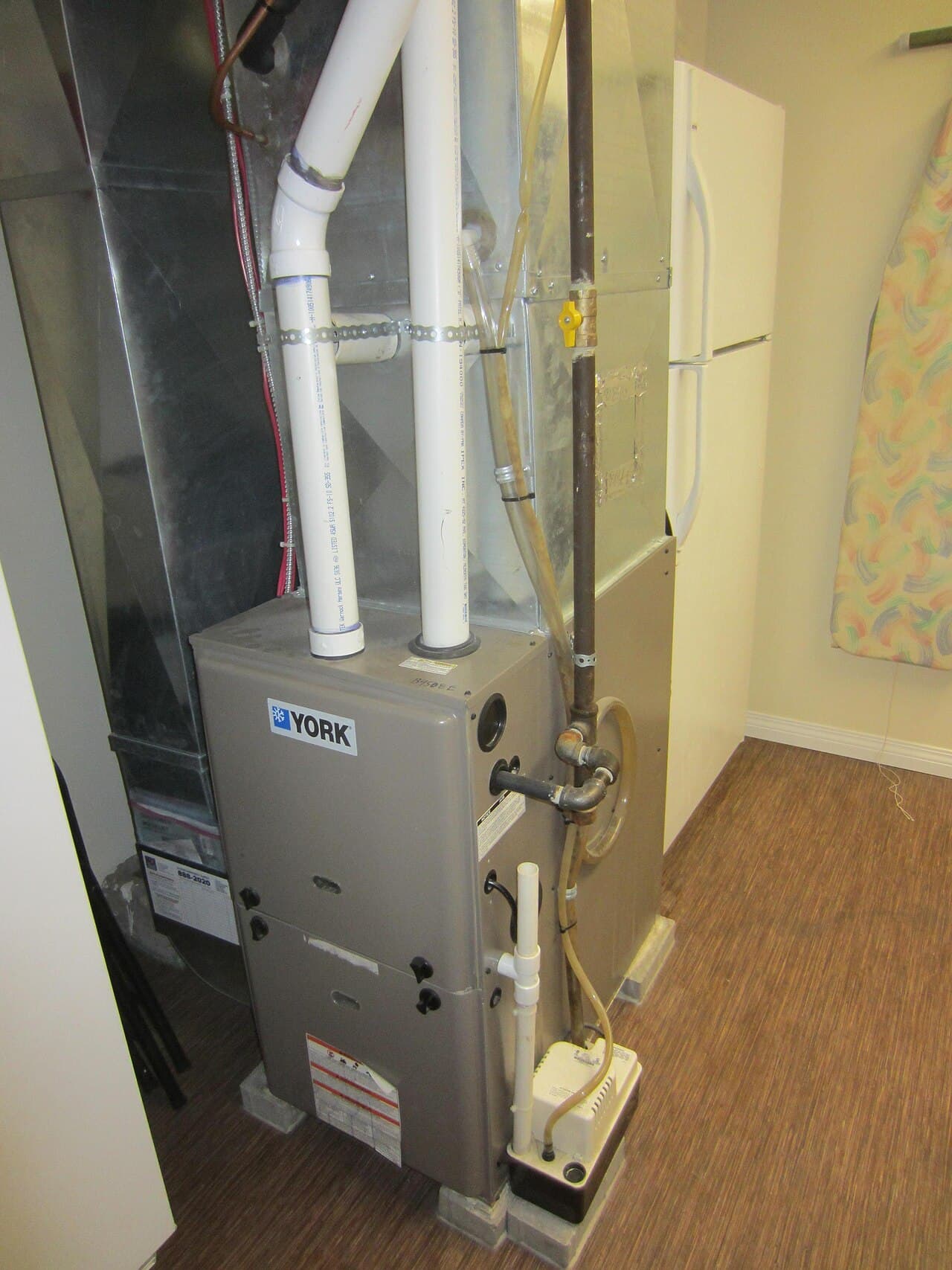
90%+ AFUE furnaces produce acidic condensate that drains through a trap and out to a floor drain. Over the summer that trap grows algae and clogs. A safety switch shuts the furnace off when the condensate can’t drain. Common, easy fix.
5. Thermostat batteries
You’d be surprised. Every fall we drive out on a “no-heat” call to replace two AA batteries in a smart thermostat. Change them at the same time you change your smoke alarm batteries.
6. Blower motor bearings
A furnace that lights fine but never seems to reach setpoint, and hums or whines loudly, has a blower motor on the way out. Modern ECM blowers are more reliable than older PSC motors but they’re not immune.
Carbon Monoxide: The One Thing You Can’t Ignore
If you don’t have working carbon monoxide alarms in your home, install them before the first cold snap. The CDC’s CO prevention guidelines recommend one alarm on every level of the home and near each sleeping area. A cracked heat exchanger — the most dangerous furnace failure mode — is silent, invisible, and only detected by a CO alarm or professional combustion analysis.
Any of the following symptoms are a call-us-now situation:
- CO alarm activates.
- Yellow or orange flames in the burner (should be blue).
- Soot or scorching around the furnace cabinet.
- Persistent flu-like symptoms that go away when you leave the house.
The Fall Furnace Prep That Prevents 90% of These Calls
A proper fall furnace maintenance visit is 60–90 minutes and hits every one of the failure points above:
- Clean the flame sensor and inspect the igniter.
- Vacuum the burner compartment and check for rodent nesting.
- Test the pressure switch, gas valve, and safety interlocks.
- Flush the condensate line and clean the trap.
- Check inducer and blower motor amps against spec.
- Verify combustion with a calibrated analyzer and check for CO in the flue and living space.
- Confirm proper venting and check the heat exchanger with a scope where accessible.
Homes on an annual HVAC maintenance plan almost never call us on the first cold morning. That’s not a coincidence — it’s cause and effect.
What to Do Right Now If Your Furnace Isn’t Working
- Check the thermostat is set to Heat and setpoint is at least 5°F above room temperature.
- Confirm the thermostat display is on (batteries or breaker).
- Check the furnace power switch — it looks like a light switch, usually mounted on or near the furnace itself.
- Check for a tripped breaker in the electrical panel.
- Replace the air filter if it’s visibly dirty. Airflow restrictions trip safety switches.
- If your furnace has a status LED, count the flash pattern before you call. It tells us exactly which fault code triggered.
Beyond that, you’re into diagnostic territory that requires tools and combustion testing. Don’t bypass safety switches. Don’t take the front cover off and start pushing on the pressure switch. Call a licensed technician.
Considering a Replacement Instead of a Repair?
If your furnace is 15+ years old, a hard failure on the first cold morning is often the moment to consider a full system upgrade — especially if your AC is also aging. We break down the full comparison in our heat pump vs gas furnace guide for Southern California homes.
Call (800) 697-4014 anytime. We serve Riverside, San Bernardino, Corona, Moreno Valley, Redlands, Temecula, and every city in between with same-day and after-hours furnace repair. Not an emergency? Get a free quote online.